Review: Hell’s Kitchen Cooks at DPAC
Set in the Hell’s Kitchen neighborhood of New York City in the 1990s, Hell’s Kitchen is Alicia Keys’ semi-autobiographical musical about her upbringing in the city.

Maya Drake as Ali and the company of the North American Tour of Hell's Kitchen
While I bemoaned the announcement of yet another biographical musical set to music from the artist’s discography, I will say Hell’s Kitchen was a bit of a pleasant surprise. In addition to including the obvious (because we all knew “Girl on Fire” and “Empire State of Mind” would be in there somewhere) Keys also wrote original music and lyrics for the production. Fortunately for audiences, this blend of old and new makes the musical feel less like the same tired pattern of trying to shove an entire catalogue of music into a two-hour production and instead like more of an actual musical with a flow to the story.

Maya Drake as Ali and the company of the North American Tour of Hell's Kitchen
The musical also doesn’t try to cover Keys’ entire career, which was indeed a concern of mine, but instead focuses on the story of 17-year-old Ali (Maya Drake) as she tries to navigate first love, family, and discovering the power of music.
Drake is the production’s first stand out as she zips around the stage with a New York accent and enough energy to power the room. Serving as the production’s narrator, Drake often breaks the fourth wall and talks directly to her audience as she explains her life and neighborhood full of artists and musicians. This also helps the show’s pace, since Ali is able to just explain what is happening and get to the crux of the plot, rather than needing several minutes of expositional material.
But it is the slower moments of the show that are the most enjoyable. The pace is as breakneck as New York itself, between the rapid fire slew of songs (with only a few minutes of dialogue between each one) and the speed at which the actors talk throughout the show. Drake’s renditions of songs like “The River” and “Kaleidoscope” give audiences a moment to appreciate her impeccable voice and technical talent as the music ebbs, flows, and swells like…. well…. a river. Or a kaleidoscope, full of highs, lows, and bursts of bright color as Drake shows off her range.

Kennedy Caughell as Jersey and Maya Drake as Ali in the North American Tour of Hell's Kitchen
Serving as a sharp contrast to the impulsive Ali is her former-party-girl-turned-straightlaced-protective mother Jersey (Kennedy Caughell). For most of the show, Jersey is pretty much what you expect: trying her best to protect her daughter, fighting with her teenage daughter, pretty musical theater-y voice, etc., etc.
But when she started singing “Pawn It All” in Act II, all bets were off. The room went silent as Caughell poured her heart, soul, passion, and rage onto the stage, making it by far the best part of the show. Caughell’s technique, breath support, and vocal control were obvious, earning her a well-deserved standing ovation from some of the audience at the end of the number.

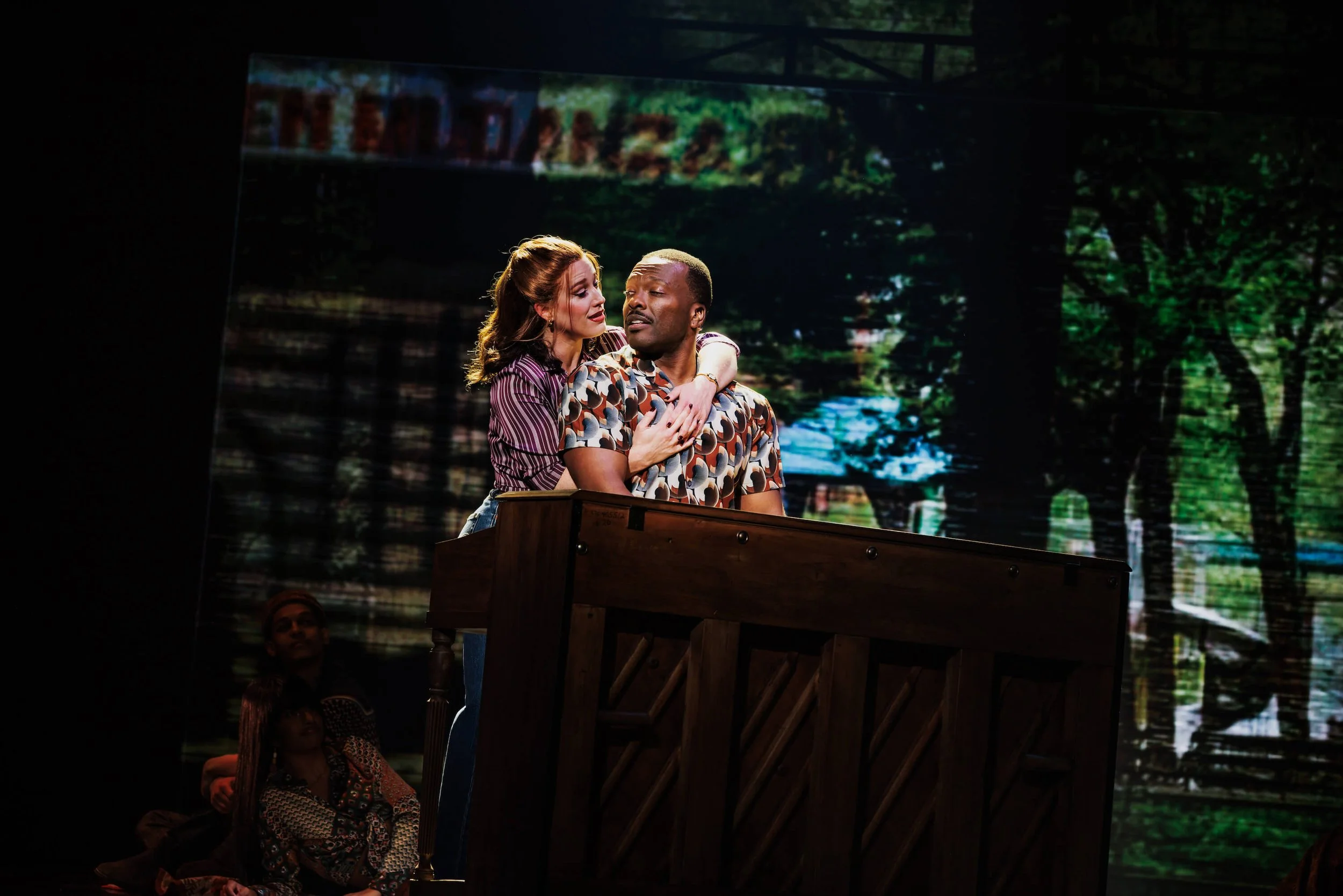
Maya Drake as Ali and Roz White as Miss Liza Jane in the North American Tour of Hell's Kitchen
While Ali clashes with her mother, she seeks comfort in the motherly wisdom of Miss Liza Jane (Roz White). After stumbling across Miss Liza Jane playing the piano one night, Ali is captivated. Miss Liza Jane becomes her teacher, not only on the piano, but in life as well, speaking with a regal authority as she earns Ali’s (and audiences’) respect. Her numbers “Perfect Way to Die” and “Authors of Forever” are steady guiding stars as White commands the room.
At its core, Hell’s Kitchen is about women and focuses on the relationships between them- mothers and daughters, mentors and mentees, friends, and even just individual reflections. The male characters in this production are perfectly fine, and actually, JonAvery Worrell as Ali’s boyfriend Knuck and Desmond Sean Ellington as Ali’s father Davis, each hold their own and match the women in terms of vocal talent. But it is the gritty, loving, hopeful, heartbreaking, wonderful relationships of the female players that power the production.
Of course, one doesn’t actually know that until Act II. I don’t think I’ve ever said this before, but Act I was…better…than Act II? Normally, by the end of Act I in a production, most, if not all, of the problems are revealed, setting our hero or heroine to go on their big, climactic journey in Act II. But in Hell’s Kitchen, most of the plot actually took place in the second half of the show. Act I certainly wasn’t bad by any means, and the last five minutes did finally give us some real conflict, but it was not until the second half of the production that I actually cared about these characters and was emotionally invested in their story.
Of course, no musical would be complete without the ensemble and talented dancers. But in Hell’s Kitchen, they make the show. With so many musical numbers, it would be easy for them to all blend together. It is a testament to the dancers in this production that each musical number comes alive with its own personality, particularly during the highly anticipated moments of “Girl on Fire,” (knocked out of the park by Ali’s friend Jessica, played by Marley Soleil) and “Empire State of Mind.” When combined with visually captivating costumes and choreography from Dede Ayite and Camille A. Brown (respectively), Ali’s vibrant neighborhood full of art and music and creativity becomes a reality for us all.
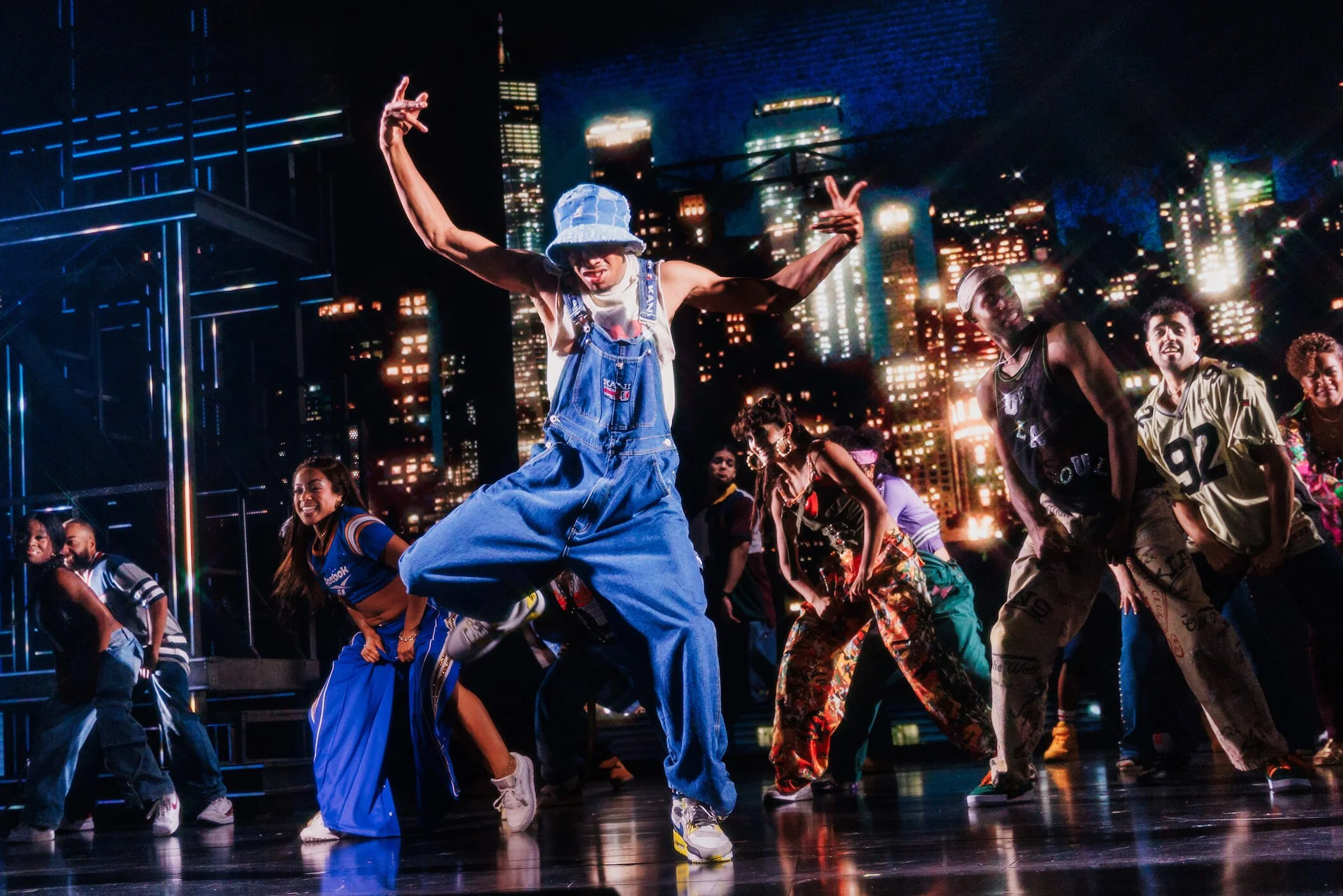
The company of the North American Tour of Hell's Kitchen
The production also features a book from Kristoffer Diaz, scenic design from Robert Brill, lighting design from Natasha Katz, sound design from Gareth Owen, and projection design from Peter Nigrini.
Hell’s Kitchen runs at the Durham Performing Arts Center through Sunday, February 22, 2026. Please be advised that the production contains strong language and adult themes, and is not recommended for anyone under the age of 12. This event utilizes theatrical haze, bright lights, and loud noises. Tickets can be purchased here.
All photo credit to Marc J Franklin